

Walkaround Checks - Where Road Safety Starts
Every day, often before the sun is above the horizon, hundreds of thousands of commercial vehicles are started up by their drivers and then they head out on to the UK’s road network to transport goods or passengers from one point to another, often with demanding time constraints thrown into the mix. But before these wheels of commerce literally begin to turn, all operators and crucially drivers of these commercial vehicles should have completed “the most fundamental element of road safety”; the Vehicle Walkaround Check.
The Walkaround Check – a Legal Duty and Safety Priority
All commercial transport operations are legally bound to require their drivers (or someone else who has the necessary expertise) to undertake this essential task to ensure that the vehicle that they have been tasked with driving for the day is correctly maintained, compliant with the rules and regulations and most of all safe to use on the public roads. It is easy (or perhaps the better word is tempting) to overlook this vital safety check, especially when commercial pressures mean that getting vehicles out and on the road and working is paramount to so many operators’ financial health. With profit margins being squeezed from all sides, and the UK economy’s current downturn in growth making competition for work fierce, it is too easy for transport operators to take shortcuts on safety. But the legal and commercial ramifications for operators who decide to go down that route can be catastrophic.
What is Required on a Walkaround Check?
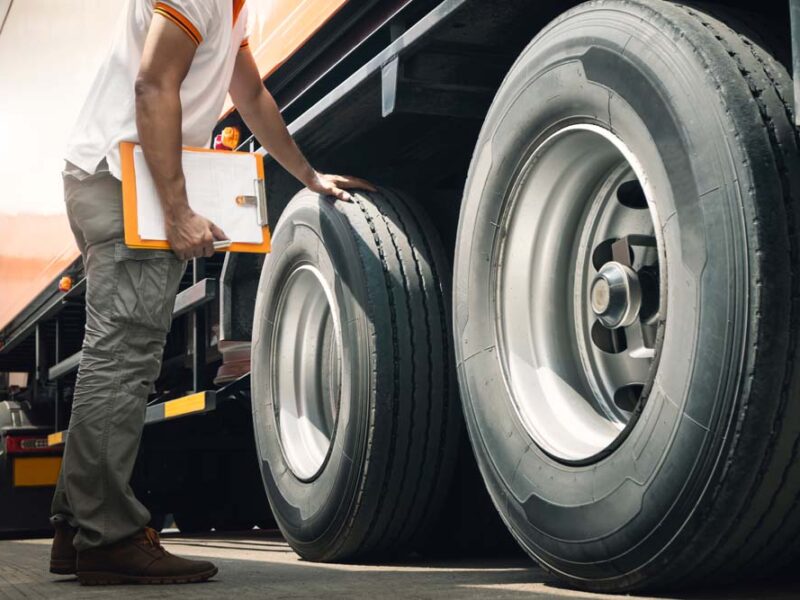
A thorough walkaround check means that your drivers should be checking and inspecting all the relevant items – from seat belts to tyres – that will be familiar to professional drivers and which have been the subject of DVSA guidance for so many years. Each vehicle’s bodywork should be reviewed for issues and the load security established. There are 27 separate vehicle areas listed in the official guidance and individual lorries maybe fitted with other items that should be checked on a daily basis. If any defects are spotted then accurately reporting them and making sure that they are properly addressed (which may mean not using the vehicle until they are addressed) are paramount.
The government website has a useful document which gives a good overview on what should be included in a walkaround check. It is also possible to download a template to check and record defects for your drivers to use, along with a diagram of a vehicle and the key points/areas to be checked.
Operator’s Responsibilities:
While it is usually the driver of the vehicle that must undertake the walkaround check, the operator of the vehicle and if applicable their Transport Manager are also accountable for ensuring that walkaround checks are done correctly and monitored. An operator’s responsibilities include:
- Systems: the operator must have robust systems and processes for reporting defects, undertaking maintenance scheduling and adequate recording arrangements to show that both are done by the drivers of the vehicles.
- Monitoring: The operator should undertake spot checks on vehicles, review any defect reports in a timely manner and audit any maintenance systems to ensure that they are up to the task. For instance, has your maintenance provider spotted defects that should have been noticed on a walkaround check? How does that feed back into the processes/systems for vehicle safety?
- Provide Tools: Given that so many vehicles are on the road before the sun is above the horizon, and long after it has gone down, ensuring that your drivers have the necessary tools, such as torches to enable them to properly check the vehicle is key. There also should be a way of contacting the authorised person in case of a defect that would mean the vehicle is not suitable to be used. Simple things like making sure the defect report form (whether paper or electronic) has adequate space to allow for accurate reporting of issues will also be key to the success of this key safety check.
- Training: Ensuring that every driver is properly trained on how to carry out the checks, how to record any issues and how to decide if it is something that needs remedial action quickly is essential. A process of following up with additional training or disciplinary action if defects are not spotted or reported is also essential for ensuring that the process is embedded in drivers’ routines.
“I’m Running Late; it won’t hurt to miss the check this one time....”
Unfortunately taking short cuts on vehicle safety and maintenance can have very serious repercussions both for the driver who skips the check due to time constraints, the operator of the vehicle and ultimately any member of the general public that is unfortunate enough to be involved in an accident caused by unsafe vehicles being used on the UK roads.
The consequence of non-compliance with walkaround checks can range from:
- Receiving immediate roadside prohibitions – where vehicle defects must be repaired and the prohibitions removed before the vehicle may be used again.
- Financial penalties being applied to the driver involved.
- Criminal prosecution of the driver and potentially the operator and/or other managers who may be liable for a vehicle being unsafe.
- Regulatory action involving the Traffic Commissioners including the risk of Operator’s licences being curtailed, suspended or revoked, directors and operators being disqualified from holding or obtaining operator’s licences in future, loss of repute for Transport Managers and the suspension or revocation of a driver’s vocational entitlement.
The daily walkaround check is both a legal obligation and a critical safety measure. As the DVSA and government literature states: “it protects lives, ensures compliance and supports the integrity of commercial transport operations. Vigilance and consistency are essential”.
As always if you would like to discuss this aspect of transport and regulatory law, or if there is another issue that your transport operation is facing then please call now on 01279 818280 or click here to send us an email. We are here to help.
© Richard Pelly, October 2025
Latest Coach & Bus Industry News and Insight
The Senior Traffic Commissioner’s Statutory Guidance
The value of The Statutory Guidance Documents and the importance to operators, nominated transport managers and other professionals involved in the operation and driving of large commercial vehicles cannot be overstated…
Walkaround Checks – Where Road Safety Starts
Every day, often before the sun is above the horizon, hundreds of thousands of commercial vehicles are started up by their drivers and then they head out on to the UK’s road network to transport goods or passengers from one point to another, often with demanding time constraints thrown into the mix…
Traffic Commissioner’s Annual Report 2024/25: “Don’t Look Back in Anger”
Time has flown by and once again we find that the schools are back after the long summer break and the Office of the Traffic Commissioner has issued its annual report to the Secretary of State, providing a review of the year…
An Apple a Day to Keep the DVLA Away – A review of the DVLA’s Rules on Health Checks for Professional Drivers
There has been some discussion in the industry trade press recently that has highlighted proposed changes to how the disease of diabetes is monitored in professional drivers by the DVLA. One article in RouteOne Magazine stated that…
Revisiting the DVSA’s Guide to Maintaining Roadworthiness
In April 2025 the Driver & Vehicle Standards Agency (DVSA) issued the latest edition of its Guide to Maintaining Roadworthiness.
The Wheels on the Bus go Round & Round….but how do they Stop?
At the tail end of 2024 a Public Inquiry was held in front of Traffic Commissioner Kevin Rooney where the subject of brake maintenance practices was called into question…
Maintenance Provision Rating Scheme for Commercial Vehicle Workshops is Launched
One of the key tenants of running a commercial vehicle operation, whether ‘HGV’ or ‘PSV’ is that the maintenance of the vehicles is paramount. For some operators this will mean having their own maintenance facilities and teams to look after their fleet of vehicles in house, but the majority of operators in the UK are reliant on 3rd Party maintenance providers…
New Rules for Vehicle Operators and Drivers Carrying Out International Journeys
The Department for Transport and the Driver and Vehicle Standards Agency recently issued a bulletin regarding the new rules that vehicle operators and their drivers will have to comply with if travelling on international journeys…
Road Haulage Association Members and DVSA Leadership Work Shadow Each Other!
To help highlight the Road Haulage Association’s “National Lorry Week” which this year was between 4th and 8th November 2024, the Road Haulage Association and the DVSA’s Leadership team decided to spend some time work shadowing each other….
2024 Update to Guide to Maintaining Roadworthiness (GTMR)
The Guide to Maintaining Roadworthiness is the Driver & Vehicle Standard Agency’s (DVSA) standard produced in collaboration with key industry stake holders which explains the responsibilities and systems involved in maintaining vehicles in a roadworthy….
New Driver CPC Reforms to be in Force from 3rd December 2024
Following a very lengthy consultation period on this matter launched in early 2023, Parliament finally debated the “Vehicle Drivers (Certificates of Professional Competence) (Amendment) Regulations 2024” on Tuesday 29th October 2024…
When Sat Nav’s Lead Lorries Astray!
Lorries getting into trouble and causing chaos in the small country roads of Great Britain have been making headlines again. Whilst a lot of this content is amusing and no doubt is a winner with internet audiences there is a very serious side to these incidents…